
by Ben Wilde
Climate change seems to have disappeared from the spotlight. Politicians and the media both are giving the issue far less focus, at a time when the continued public reinforcement of its importance seems crucial.
Academic thinking suggests that the best way to achieve public engagement with the issue is to approach it at a local level. It was with this in mind that I decided to examine the role of local media and climate change in my recent dissertation. Living in Cornwall, the success of groups like Wadebridge Renewable Energy Network and Community Energy Plus led me to believe that local acceptance of climate change was a done deal. However, my study opened my eyes to how local communication efforts on climate change are failing to get through.
Don’t mention the climate
In fact, it became apparent that the Cornish press were referencing climate change less and less, even while debates pertinent to it continued. Articles regarding energy security or sustainability increasingly did not mention climate change directly. This might be posited as a progressive step, suggesting that acceptance of changing climate is now a given and the media had moved beyond the division between affirmers and sceptics. In truth its implications seem more negative.
The first and most obvious problem is that the wider debate has by no means been resolved. Although sporadic, articles and letters disputing the dangers or even the existence of climate change were still present in the papers I studied. Most suggested a lack of understanding and awareness rather than the embedded ideological bent that some of the national papers seem to display. But the local press is in a strong position to influence: unlike almost any other medium a local paper it is in tune with what matters to its community. There are few mediums that are better situated to tailor or frame the debate for local consumption.
Another problem posed by the removal of climate change from the journalistic environment is that it becomes more difficult to tackle scepticism directly. In his latest book The Inquisition of Climate Science James Powell asserts that the sceptical side of the debate proceeds by conceding a small amount of ground, only to circle its wagons in a new and often tangential position. By not addressing climate change directly but addressing other related issues the sceptical position seems more defensible. After all, they are not attacking the established body of scientific work but rather engaging the divisive social issues it spawns.
The final problem is the confusing messages it creates. We can discuss, say, the benefits to business of a low-carbon economy, but if the debate ignores the threat of climate change the case for funding such programmes is harder to make. Rather than being eliminated from the discussion, climate change needs to be localised and materialised into people’s every-day lives.
Full of wind
Unsurprisingly it is media savvy sceptics that have thus far best achieved this form of materialisation, by focusing the debate around the onshore wind turbine. The most prominent and protracted attacks have come from the Daily Telegraph, but they are no less prevalent and effective in the Cornish press.

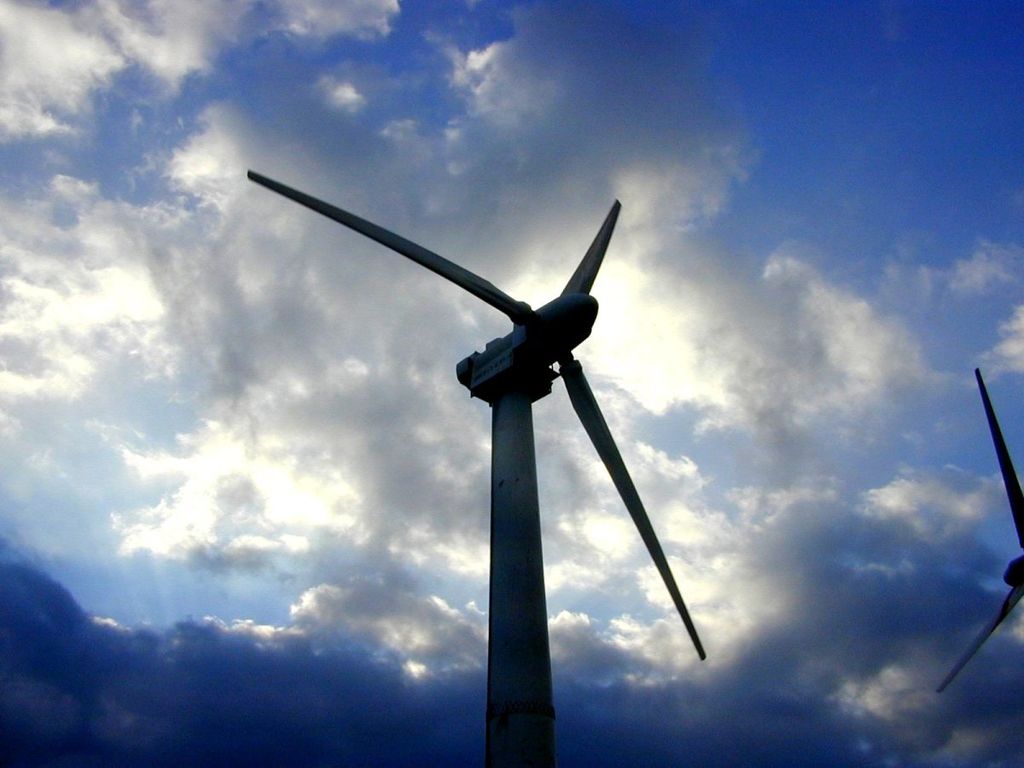
Turbulent times for turbines. Photo by Harvey McDaniel, via Wikimedia Commons
Recent thinking sees economic and environmental imperatives increasingly coming into line, and the Cornish media occasionally recognise the potential for wind energy development in Cornwall to help diversify a struggling tourism-based economy. Yet the removal of climate change from the debate has made wind turbines the perfect target for sceptics. The Feed In Tariff system led them to be labelled “cash-machines for the rich” (Cornish Guardian, 11/1/2011) whilst their construction was branded a “monstrous invasion” (Falmouth Packet, 5/10/2011) of the landscape. In the Cornish local press, wind turbines increasingly signify zealous outsiders with too much money looking to force a product onto the people. It communicates this at a community level, to the same people who are constantly petitioned to recycle, conserve energy and consume less.
That is not to say that there is no validity to these points, and turbine development cannot simply proceed to the detriment of all other interests. But turbine development is not really the point of these articles. As Powell suggests, the sceptical argument has simply moved the goalposts; this line of attack has come to prominence as green development is being heralded as the next step for the economy, not just the unfortunate result of no longer being able to burn fossil fuels without consequences. This new green argument requires a sceptical counter-argument – ironically, one drawn from the traditional armoury of the green movement. A quote from Michael Mann’s work on scepticism, The Hockey Stick and the Climate Wars, perhaps emphasises the sceptics’ approach best, “Doubt is our product since it is the best means of competing with the body of fact that exists in the mind of the general public”.
What does this mean from a local media perspective? Firstly, I think it highlights the importance of local media as a communication source. Whilst print is a struggling medium it still has a great deal of reach and is often a direct link into hard to reach parts of the community. It is also very much contested ground, there to be won with the right messages. Unfortunately, it is currently most effectively engaged by sceptical articles that set communities against onshore wind.
Secondly, whilst removing the portent of doom aspect from the climate change debate may have advantages, it risks being at the expense of the public’s awareness and understanding. It seems to be making it easier for sceptics in the local press to move the goal posts and leaving the climate change message confused and without focus.
The anti-climate change argument has been materialised in the media portrayal of wind turbines, giving the sceptical approach a focal point for its cause and an opportunity to sow seeds of doubt. If those who believe in climate aim to win the contested ground of local media they need to learn this lesson and find their own clear, popular arguments. The example of the nascent marine renewables sector perhaps offers a template for the sort of media-aware messaging that green technologies need to develop. It has had a limited press so far, and like onshore wind this has emphasised the obvious topics of its green credentials and the economic benefits for Cornwall.
But as we have seen, this isn’t sufficient to secure a good press, and it is encouraging that the media has already caught on to several positive themes highlighting its continuation of a traditional maritime development. It has also been compared with the heritage of technological innovation attached to Cornish mining development, giving the technology an indigenous element. Whilst at this stage marine energy has a much lower profile than wind, it offers a positive model for local communication of climate change in the future.




Ben, you’ve made me think differently about the influence of the local press, and the importance of narrative. It’s not enough to point to the economic or environmental benefits of a change in energy development or waste management – that isn’t at the core of what influences how people respond to the arguments on these topics.
It is discouraging that the press seems less willing even to mention climate change these days – but I confess, I too have come to dread provoking the same old tedious debate between sceptics and believers when the topic appears on blogs and forums. It seems that views have become so entrenched and intransigent, and there must be a temptation on the part of the media to sidestep the whole thing if possible, rather than be labelled partisan. Not a very brave kind of journalism – but I suppose it is easy to get objectivity and neutrality mixed up, especially if you aren’t in a position to evaluate the two sides’ arguments.